Europe · Norway · Baking
Mjølgamp from Gausdal
Soft rectangular coffee cakes topped with sugar and rusk crumbs. This version contains no cinnamon; add a little to the topping if you prefer. The milk proportions and topping quantities are adaptations.
60 minutesMedium
Add to shopping list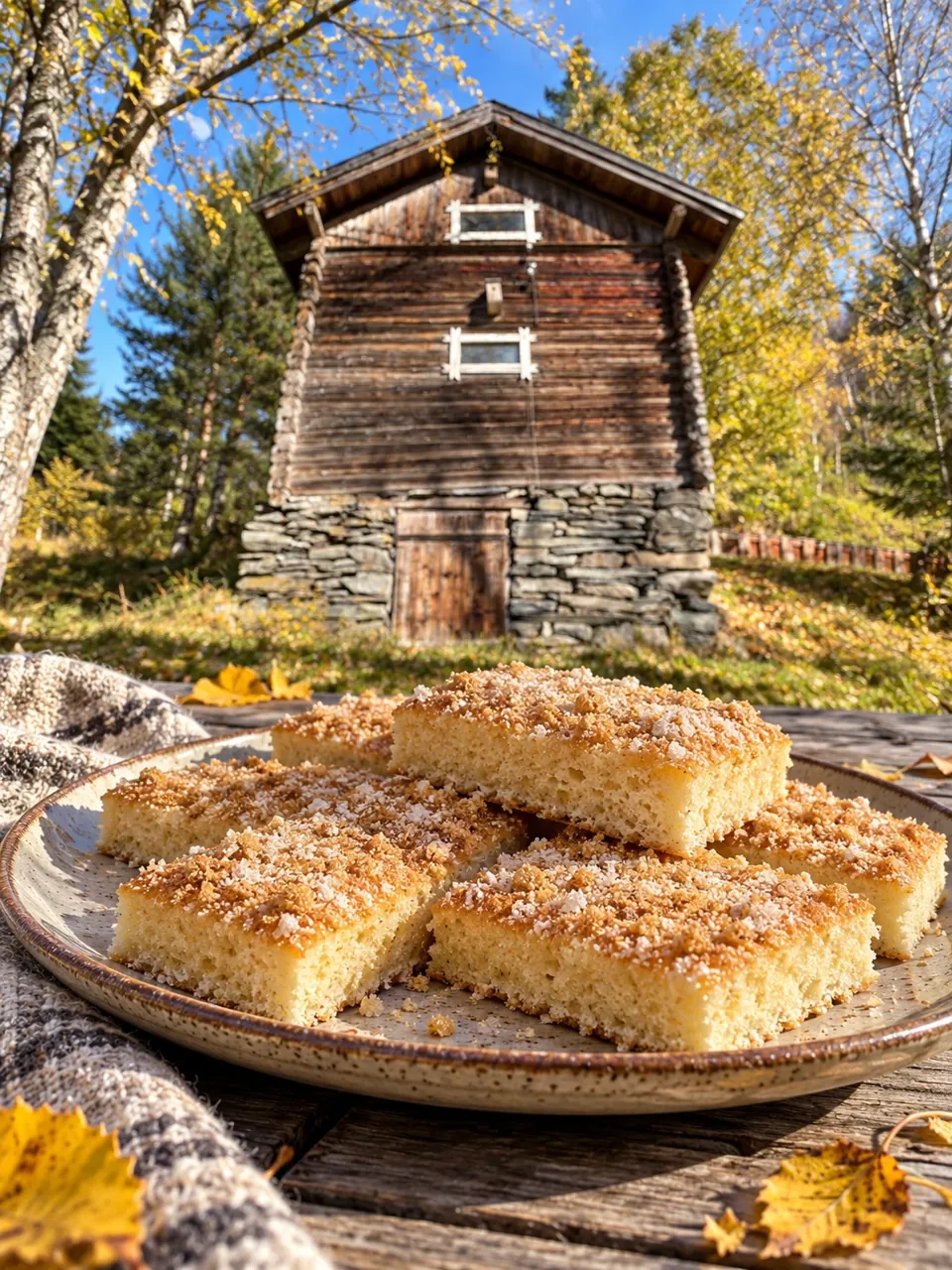
Ingredients
- 250 g softened butter
- 500 g sugar
- 800–900 g all-purpose flour
- 250 ml cultured milk
- 250 ml whole milk
- 20 g baking ammonium (hornsalt / ammonium bicarbonate)
- A little water for brushing
- Topping: about 50 g finely ground unsweetened rusks
- Topping: about 50 g sugar
- No cinnamon in the base recipe; optionally add a little to the topping to taste
Method
- 1Cream together the butter and sugar. Mix the baking ammonium thoroughly into 800 g flour. Work the flour mixture and milk alternately into the butter mixture. Adjust with the remaining flour until rollable, avoiding unnecessary extra flour.
- 2Roll on a lightly floured surface into a sheet roughly 66 × 44 cm, working in smaller batches if easier. Aim for an even thickness of about 7–10 mm.
- 3Mix the rusk crumbs and sugar. Brush the dough lightly with water, scatter over the topping and cut into rectangles about 11 × 5 cm. Arrange fairly close together on parchment-lined baking sheets.
- 4The base version has no cinnamon. If you like, add a little cinnamon to the topping, perhaps just for some of the cakes.
- 5Heat the oven to 250°C conventional heat. The reproduced recipe specifies about 15 minutes. Bake one sheet at a time on the middle rack, checking after 8–10 minutes: the cakes should be pale golden and cooked through. Test a couple of pieces first and reduce the temperature if the tops darken before the centres cook.
- 6Baking ammonium releases a strong ammonia smell during baking; ventilate well. Cool on a rack. A cooled test cake should not taste sharply of ammonia. If it does, roll thinner and check that the cakes are cooked through.
- 7Wrap only when completely cold to preserve softness. Freeze any you will not eat within the next few days.
- 8Adaptation and source: The reproduced recipe specifies 500 ml mixed cultured and regular milk without a ratio; equal parts are used here. Topping quantities are practical estimates.